July 30, 2026
Description:
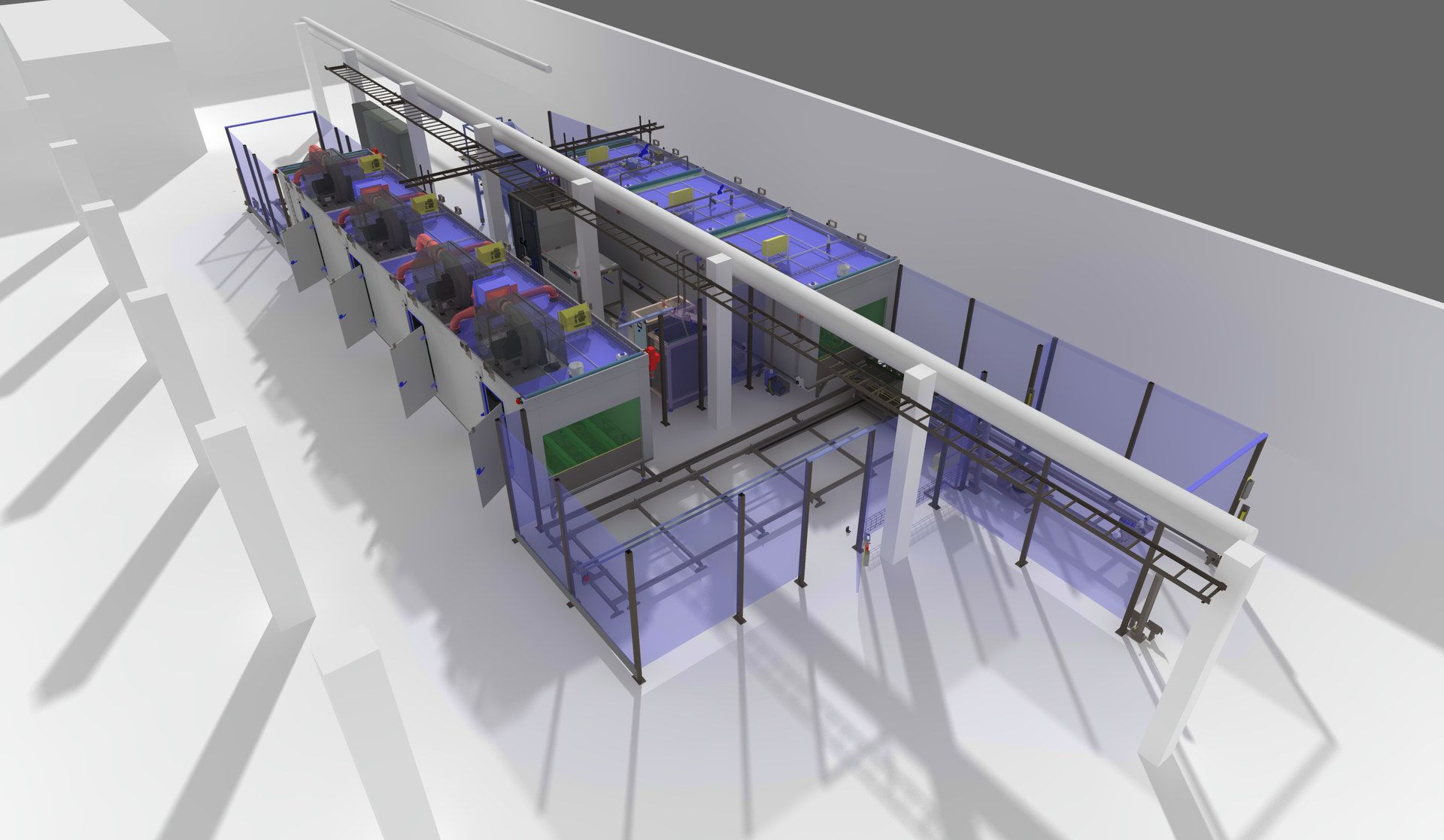
The footwear washing line is a system designed for industrial use that combines internal and external washing of footwear, rinsing, internal disinfection and boot drying. Trolley-based handling allows multiple pairs of footwear to be conveyed through the process as a single batch.
Completion Date:
July 30, 2026
Contact us and tell us about your needs. We'll tailor a solution that meets your requirements.
Contact UsDiscover other similar projects we've completed.
The footwear washing line is a system designed for industrial use that combines internal and external washing of footwear, rinsing, internal disinfection and boot drying. Trolley-based handling allows multiple pairs of footwear to be conveyed through the process as a single batch.
In the complete system, the washing line, transfer car, dryer, and infeed and outfeed ramps form a continuous material flow. The design focuses on compatibility between the machines, controlled transfers and a clear process sequence.
The footwear is placed in a handling trolley, which moves from the infeed conveyor to the washing line. The inner surfaces of the footwear are treated through the trolley's pipework and the outer surfaces with separate spray nozzles.
The treatment proceeds in stages:
Laced footwear leaves the process before the dryer. The boot trolley continues to the drying line via the transfer car.
The dryer is divided into four consecutive sections in which the boots are treated alternately with heated and unheated air. The first and third sections use air at approximately 50 °C. The second and fourth sections operate with unheated air.
Each section has a treatment time of 15 minutes, so the drying cycle described takes a total of 60 minutes. After drying, the trolley moves to the outfeed ramp, which lowers so that the trolley can be removed in a controlled manner.
A detailed 3D process animation was produced to show how the equipment works. It makes visible both the material flow of the entire line and the treatment stages taking place inside the machines.
The animation illustrates the trolley transfers, the movements of the washing and handling equipment, the tilting, and the operation of the ramps and end flaps. The model was also used to examine the heights between machines and the travel of the trolley wheels at transfer points.
Stage-specific captions and accelerated clocks link the machine movements to the actual treatment times. This allows a long process to be presented as a short, easy-to-follow sequence that supports technical communication and helps viewers understand how the equipment works.



